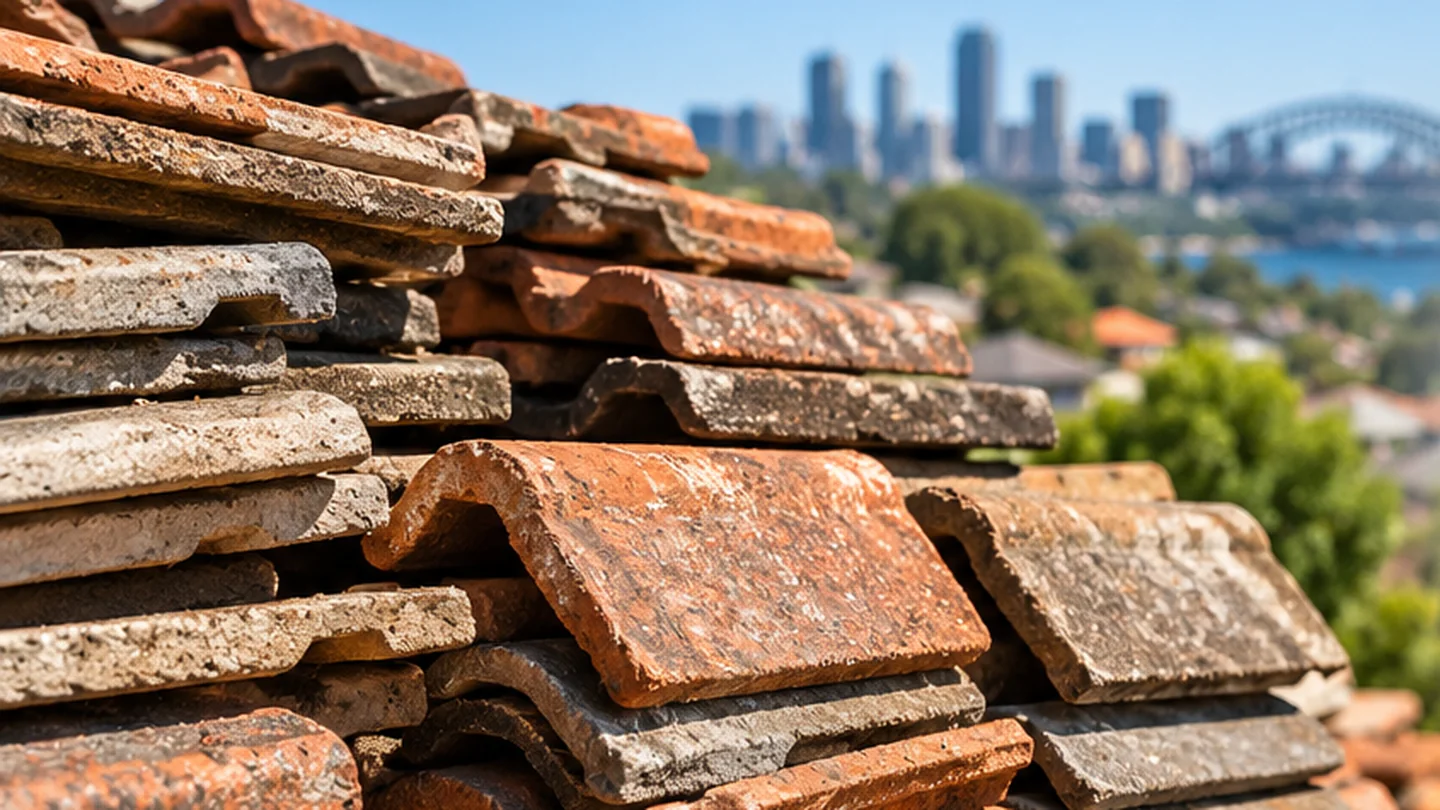
Looking for a replacement tile for your roof? When a heavy storm or a falling branch knocks out a few roof tiles, homeowners usually head straight to their local building supplier.
But what if they don’t have the specific profile or colour tile you need to match your existing roof?
Does that mean you have to leave your roof looking tile-less and ugly? Or worse, pay out thousands of dollars for a full roof replacement?
Absolutely not! Sourcing replacement tiles can be frustrating, especially for older Australian homes, but there is a solution that will keep your roof looking its best and save you money:
Second-hand roof tiles!
But are recycled roof tiles actually a good choice for repairs? Or will using them result in a dodgy patch job? It’s time to find out!
In this blog post, we’ll explain what recycled roof tiles are and help you decide if they are the right choice. You’ll also learn how to match them properly and what you need to know before you buy second-hand roof tiles in Australia!
What Are Second-Hand Roof Tiles?
Second-hand or recycled roof tiles are materials salvaged from demolished buildings, roof restorations, or industrial sites.
But they definitely aren’t junk! Specialists carefully source, clean, and grade them for reuse.
These tiles generally fall into two categories:
Recycled Concrete Roof Tiles: Durable and widely available, these are often sourced from older suburban homes being re-roofed.
Recycled Terracotta Roof Tiles: These tiles are great for older or heritage homes, as they give that authentic look that new tiles struggle to replicate.
These second-hand tiles can be a lifesaver if you’re replacing tiles on heritage-listed properties or older homes where the original tiles are no longer manufactured.
Are Recycled Roof Tiles Safe to Reuse?
The biggest question on every homeowner’s mind is safety. Are these old recycled tiles actually safe to reuse?
While not every old tile can be safely reused, second-hand roof tiles are very safe when sourced correctly.
New roof tiles are subjected to rigorous testing. In Australia, roof tiles are tested under the AS 4046 series of standards (Methods of Testing Roof Tiles), which supports product specifications in AS 2049 and installation requirements in AS 2050 under the National Construction Code (NCC). These standards help ensure durability, strength, and weathering.
While these standards apply to new manufacturing, reputable suppliers of second-hand tiles use similar logic to grade their stock!
When sourcing recycled roof tiles, look for a supplier that considers these standards when grading their stock, to ensure you are buying high-quality, safe second-hand roof tiles.
Are Second-Hand Tiles Right For You?
You don’t always need new tiles. In fact, using new tiles on an old roof can sometimes cause more problems than it solves. But are second-hand roof tiles the right choice for your roofing needs?
Here are 4 scenarios where using second-hand roof tiles is a great fit:
1. Replacing Discontinued Tiles
Many classic Australian roof profiles, like certain interlocking concrete designs or specific Spanish-style terracotta shapes, have been discontinued by manufacturers for decades.
If you need to replace a broken or discontinued tile, buying a new box might result in an unattractive patchwork look because the new tiles won’t match the old ones’ colour or shape. Second-hand tiles are a great, sustainable way to get a seamless match!
2. Heritage and Preservation
If your home is in a heritage conservation area, local councils often require repairs to maintain the original aesthetic.
For example, the NSW Willoughby City Council’s heritage conservation guidelines state that roof tiles on heritage homes may be replaced, but only with roof tiles that match the colour, finish and detail of your existing roof tiles.
Using modern, glossy new tiles usually violates these guidelines. Reclaimed tiles ensure you stay compliant while maintaining your home’s charming character!
3. Matching Roof Tiles for Extensions
Planning an extension? If you connect a new roof section to an old one, the transition can be jarring if the materials don’t blend. Second-hand tiles help bridge the gap between the new build and the existing roof, creating a seamless look!
4. Minor Repairs
If you’ve lost just one or two tiles to storm damage, buying a full box of new tiles is unnecessary and expensive. Sourcing a few second-hand roof tiles is a much more cost-effective and sustainable solution. Plus, weathered tiles will blend in better with your existing roof than brand new ones that stand out like a sore thumb!
How to Identify and Match Old Roof Tiles
One of the hardest parts of using second-hand tiles is finding the right ones. To ensure a perfect fit, you need to enter detective mode!
Here is a practical Roof Tile Matching Checklist that will make things easier for you:
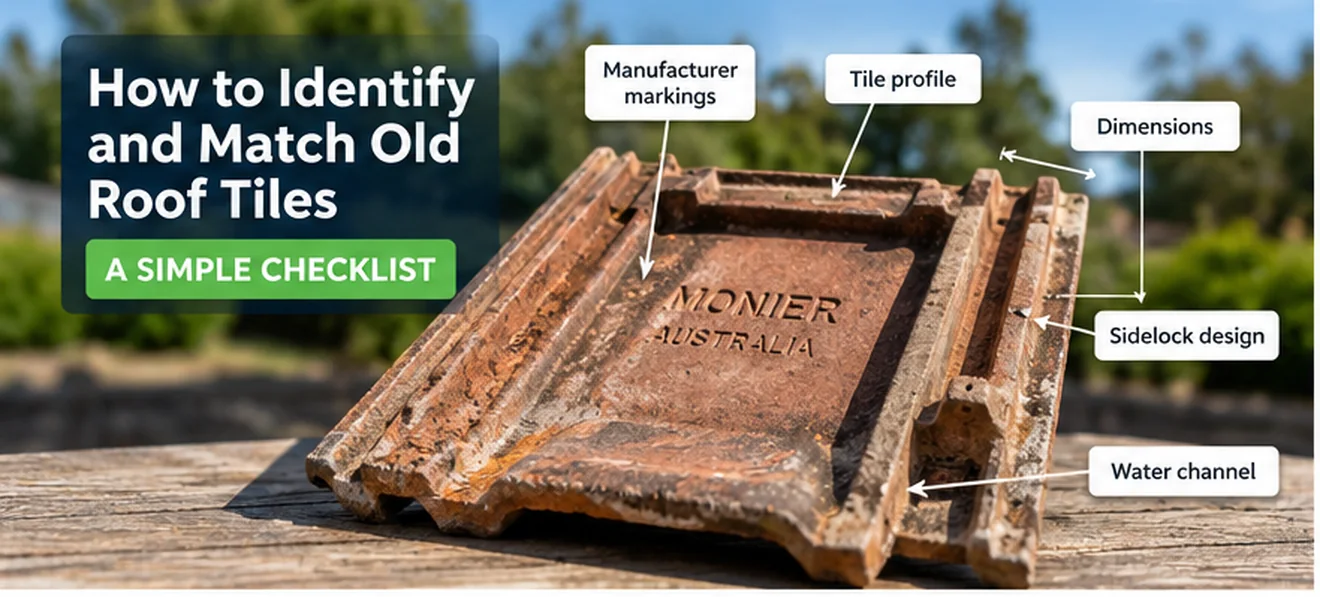
- Manufacturer Markings: Flip the tile over. Look for logos, stamps, or date codes on the underside. This can help identify the brand and era.
- Tile Profile: Is it an “M” profile, an “S” profile, or a flat tile? The curvature must match.
- Dimensions: Measure the length, width, and thickness. Even a 5mm difference can cause alignment issues!
- Sidelock Design: For interlocking tiles, the side lock is critical. It’s what keeps the roof watertight. If the lock doesn’t match, water can seep in.
- Water Channel: Check the depth and shape of the channel where water flows. This affects how water sheds off the roof.
- Material: Confirm if it’s concrete or terracotta. Concrete is heavier and more porous; terracotta is lighter but more brittle.
- Colour and Weathering: Note the specific shade. New concrete is stark white; old concrete is weathered grey. You want a tile that matches the weathered look, not the new look.
- Quantity Required: Make sure you know exactly how many tiles you need and always buy a few extra just in case.
- Ridge/Finishing Pieces: Don’t forget the ridge caps and barge tiles! They are often harder to match than the main field tiles.
For complex matches, especially with rare heritage profiles, consult suppliers of recycled roof tiles that can source tiles from similar-era demolitions for colour consistency.
Which Recycled Roof Tiles Are Better: Concrete or Terracotta?
Many homeowners also wonder which reclaimed roof tiles are better, concrete or terracotta?
Replacement Concrete Tiles are durable, but heavy. Second-hand concrete tiles are easy to source but can be porous if not sealed properly.
Replacement Terracotta Tiles are porous but lighter, and they require more care to prevent cracking during handling.
The simple answer: both can be reused safely, but terracotta needs more careful handling than concrete.
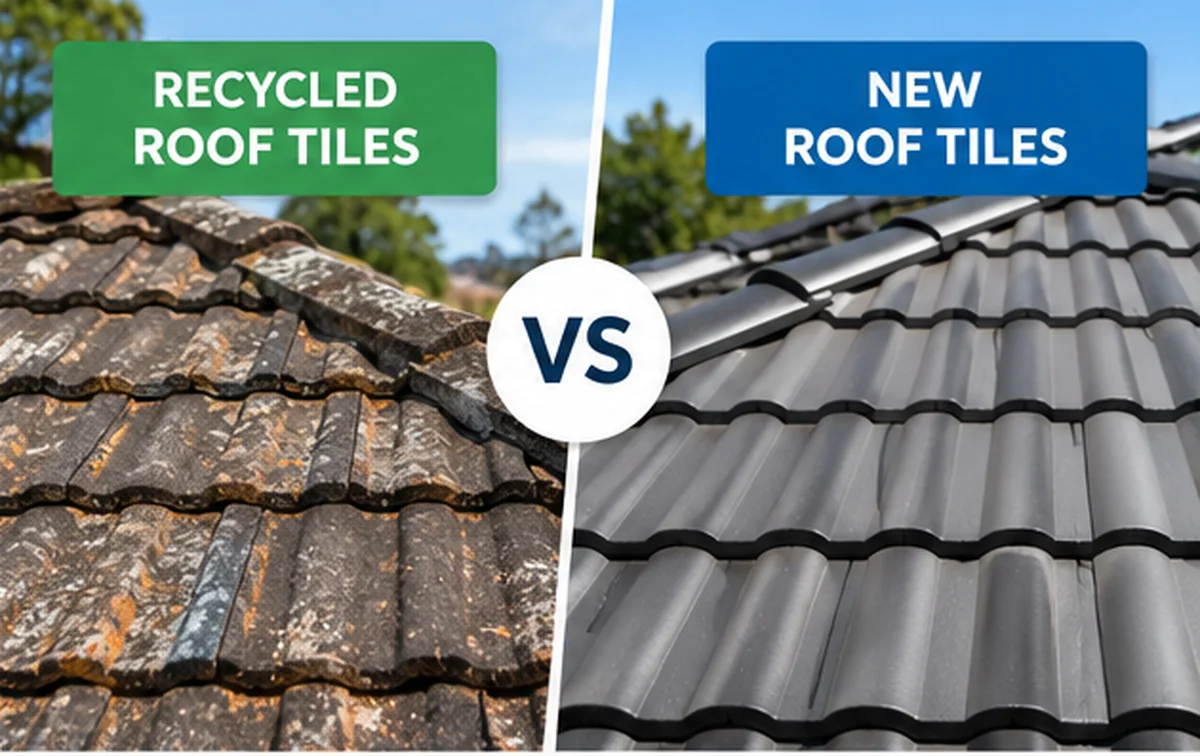
Comparing Recycled vs New Roof Tiles
So which is better, recycled or new roof tiles? The answer really depends on what your unique roofing project needs.
Here is a handy comparison table we put together to help you decide what’s best for you:
When Should You Get A Roofer to Inspect Your Roof?
Before you lay any replacement roof tiles, new or used, have a qualified roofer inspect your roof.
Second-hand tiles don’t fix underlying issues. If the timber battens are rotting, or the underlay is torn, even brand new tiles won’t save you!
Address the structural issues first, then focus on the tiles.
With the strong storms we are experiencing here in Australia, it’s more important than ever to make sure our roofs are in good condition.
The Australian Government’s Cyclone Preparedness Guide recommends checking roof tiles, sarking, timber components and batten connections for damage or deterioration, and engaging a qualified building professional if you’re unsure about their condition.
Where To Buy High-Quality Recycled Tiles
If second-hand tiles suit your needs, here’s how to find a reputable supplier of recycled roof tiles in Australia:
Look for specialists who:
- Grade tiles for quality
- Offer clear condition reports
- Have transparent sourcing practices
- Provide advice on matching profiles
- Have a strong local reputation
You should ensure they test for durability and handle cleaning professionally. And lastly, don’t forget to check their stock consistency and return policies.
With the right supplier, you’ll secure high-quality, affordable tiles that look great on your roof!
FAQs About Second-Hand Roof Tiles
Can I use second-hand tiles for a new roof?
Generally no. They are best for repairs and matching existing roofs.
Is it harder to install second-hand tiles?
It’s not necessarily harder, but it does require more care. Because old tiles vary slightly in size and weight, a roofer needs to be meticulous during placement to ensure a secure fit. It’s best to leave it to experienced roofers familiar with handling reclaimed materials.
How do I clean second-hand roof tiles before installation?
Most suppliers provide cleaned and graded tiles. If you source them yourself, you may need to pressure-wash them to remove moss, lichen, and dirt. Be gentle to avoid damaging the tile surface, especially for terracotta.
Are recycled tiles waterproof?
Yes, as long as they’re intact and installed properly.
Are second-hand tiles cheaper than new ones?
Usually, yes. But the cost varies depending on the rarity of the profile. For common concrete tiles, they can be a lot cheaper. But if you need rare heritage terracotta, prices can be higher due to demand, though they are still usually much more affordable than custom-ordering new discontinued profiles!
Recycled vs New Roof Tiles: Practical Comparison
To help with the decision, the comparison below looks at practical differences between suitable recycled roof tiles and current new roofing products.
| Consideration | Recycled Roof Tiles | New Roof Tiles |
|---|---|---|
| Older Profiles | Can provide a match for discontinued products. | May not be available in the original profile. |
| Appearance | Weathered finishes can blend with existing roofs. | Fresh finishes may stand out against older tiles. |
| Condition | Individual tiles need careful inspection. | Supplied as newly manufactured products. |
| Availability | Depends on salvaged stock and rarity. | Often easier to source in current ranges. |
| Sustainability | Reuses existing materials and may reduce waste. | Requires manufacturing new products. |
| Best Use | Often useful for small repairs and older roofs. | Often easier to specify for complete new roofing systems. |
Why Matching the Roof Tile Profile Matters
Two roof tiles can look nearly identical when viewed from the street but have different interlocking edges, drainage channels or locating nibs underneath.
This means colour is only one part of the matching process. A replacement also needs to fit correctly with neighbouring tiles, existing battens and fixing arrangements.
What to Provide to a Roof Tile Supplier
- A photograph of the roof and the damaged area.
- Clear photographs of the top and underside of a sample tile.
- Any manufacturer markings or product codes.
- Tile length, width and relevant profile dimensions.
- Photographs of the sidelock and water channel.
- The quantity of field tiles and finishing pieces needed.
A qualified roofer should safely retrieve any sample required for identification.
Important Considerations Before Reusing Old Tiles
Suitability depends on more than the age or general appearance of a roof tile. A roofer should assess the individual tile, the existing roof system and whether the proposed replacement is compatible.
Material properties vary: Concrete and terracotta roof tiles differ by manufacturer, product design, manufacture and condition. One material should not automatically be assumed lighter, more porous or less durable than the other.
Heritage approvals vary: Reclaimed tiles can help maintain an older roof’s appearance, but using them does not automatically establish compliance with local heritage requirements.
Avoid unsafe cleaning or roof access: Pressure washing may damage some older roof tiles or force water beneath roof coverings. Cleaning and tile removal should be assessed by an appropriate professional.
Roof performance involves the complete system: Weather resistance depends on tile compatibility, overlaps, roof pitch, fixings, flashings, underlay where required and installation quality—not simply whether a tile appears intact.
Where Can You Find Discontinued Roof Tiles?
If your existing roof uses an older concrete or terracotta profile, a specialist recycled tile supplier may be able to help identify compatible stock.
For example, recycled roof tile matching specialists can be useful when searching for difficult-to-find profiles for older roof repairs.
Always confirm the actual profile, stock condition, available quantity and compatibility before ordering.
Planning Roof Ventilation on an Older Tiled Roof?
If you’re also considering roof vents, skylights or other roof-mounted equipment, the condition and availability of matching tiles can become important during installation.
Installation work may require tiles to be lifted and reinstated, or new weatherproof flashing to be fitted. Discuss the existing roof condition and any replacement tile requirements with your installer before work begins.
Big Roof Ventilators offers home roof ventilation options for suitable Australian roofs.
If you’re dealing with an older roof and are unsure about its original materials, see our guide to identifying possible asbestos roofing before disturbing suspect materials.
Planning Improvements to an Older Roof?
Whether you’re repairing a tiled roof or exploring new roof ventilation, understanding the condition and compatibility of the existing materials is an important first step.
Big Roof Ventilators can help you explore natural and powered ventilation options for suitable roofs.
Enquire About Roof Ventilation →