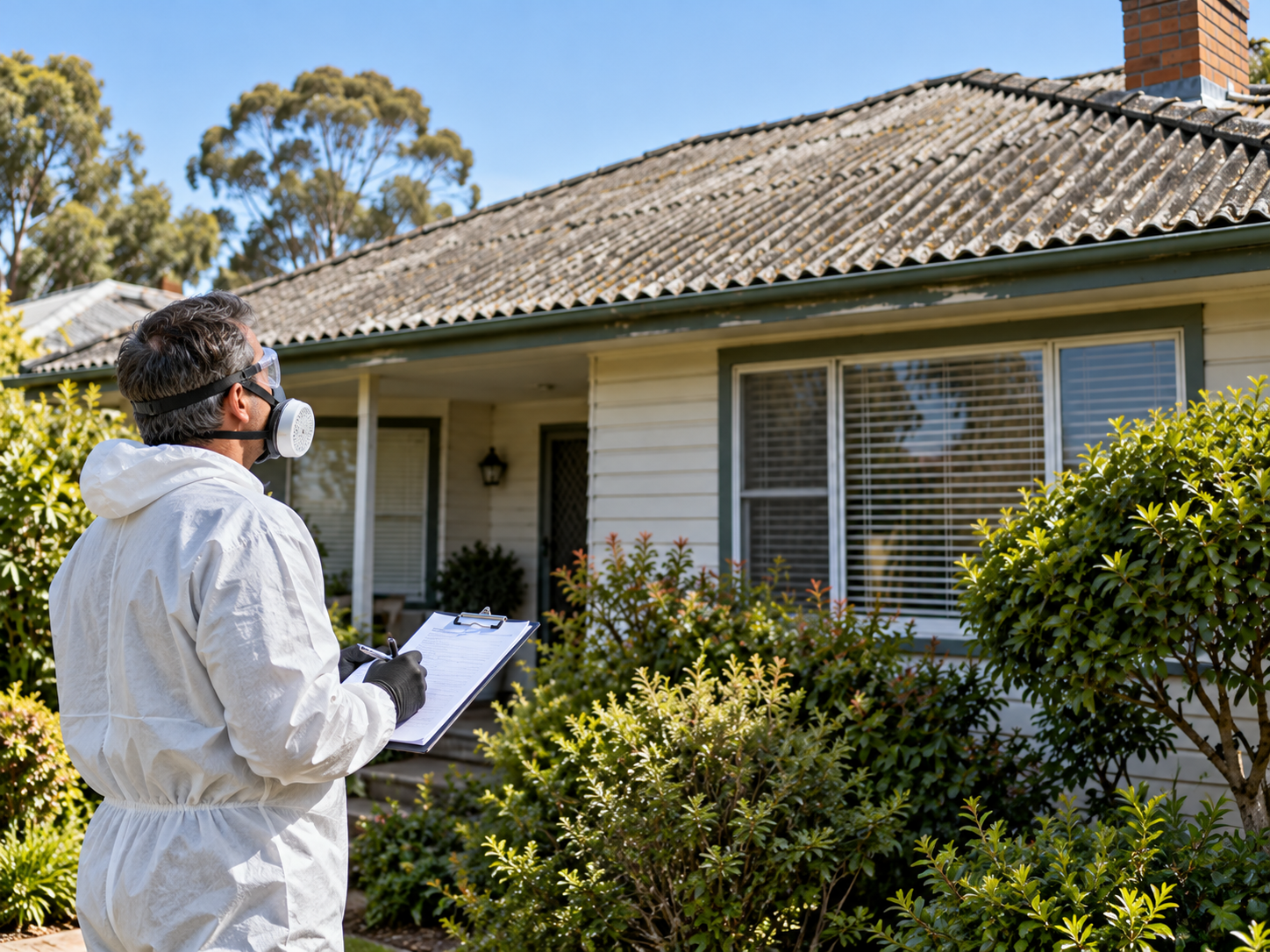
Understanding older roof materials before repairs, renovations or ventilation installation.
Are you planning a repair or renovation project, but worried your older Australian home might have asbestos lurking somewhere?
If you own a house, garage or shed built before 1990, it probably has asbestos-containing materials in it. For decades, asbestos was a staple of Australian construction because of its durability and fire resistance, so many older properties still have it in their roofing systems.
If you are a homeowner considering renovations, repairs, or even simple maintenance like installing roof vents, knowing whether your roof contains asbestos is critical.
This guide explains where asbestos roofing materials are usually found, how to tell whether you have an asbestos roof, and what steps you can take to protect your family and property.
If you want to carry out a successful, safe home repair or renovation project, read on!
When Was Asbestos Commonly Used in Australian Buildings?
To determine if your property might contain asbestos, you need to look at its age.
Asbestos was commonly used in Australian construction from the 1940s through to the early 1980s, before it was discovered that asbestos exposure can cause life-threatening illnesses, including lung cancer and Asbestosis.
While its use was gradually phased out, the NSW Government Asbestos in NSW department reports that the total ban on the import, use, and trade of asbestos-containing materials didn’t take effect until the end of 2003.
That means if your home, garage, or shed was built or renovated before 1990, there is a high chance that some form of asbestos-containing material (ACM) is present.
Even in homes built after 1990, previous owners might have installed asbestos roofing sheets during earlier renovations!
Where Might Asbestos Be Found Around the Roof?
Asbestos was not only used on the main roof surface. Its strength, fire resistance, and insulating properties made it a versatile material used in many other parts of the roof too.
When assessing your property, look at these common roof areas where asbestos might be found:
Asbestos Cement Roof Sheeting
The most common form of asbestos found in Australian homes is asbestos cement. This mixture of cement and asbestos fibres is often called an old fibro roof (though fibro technically refers to wall cladding, people often use the term for roofing).
Garage and Shed Roofs
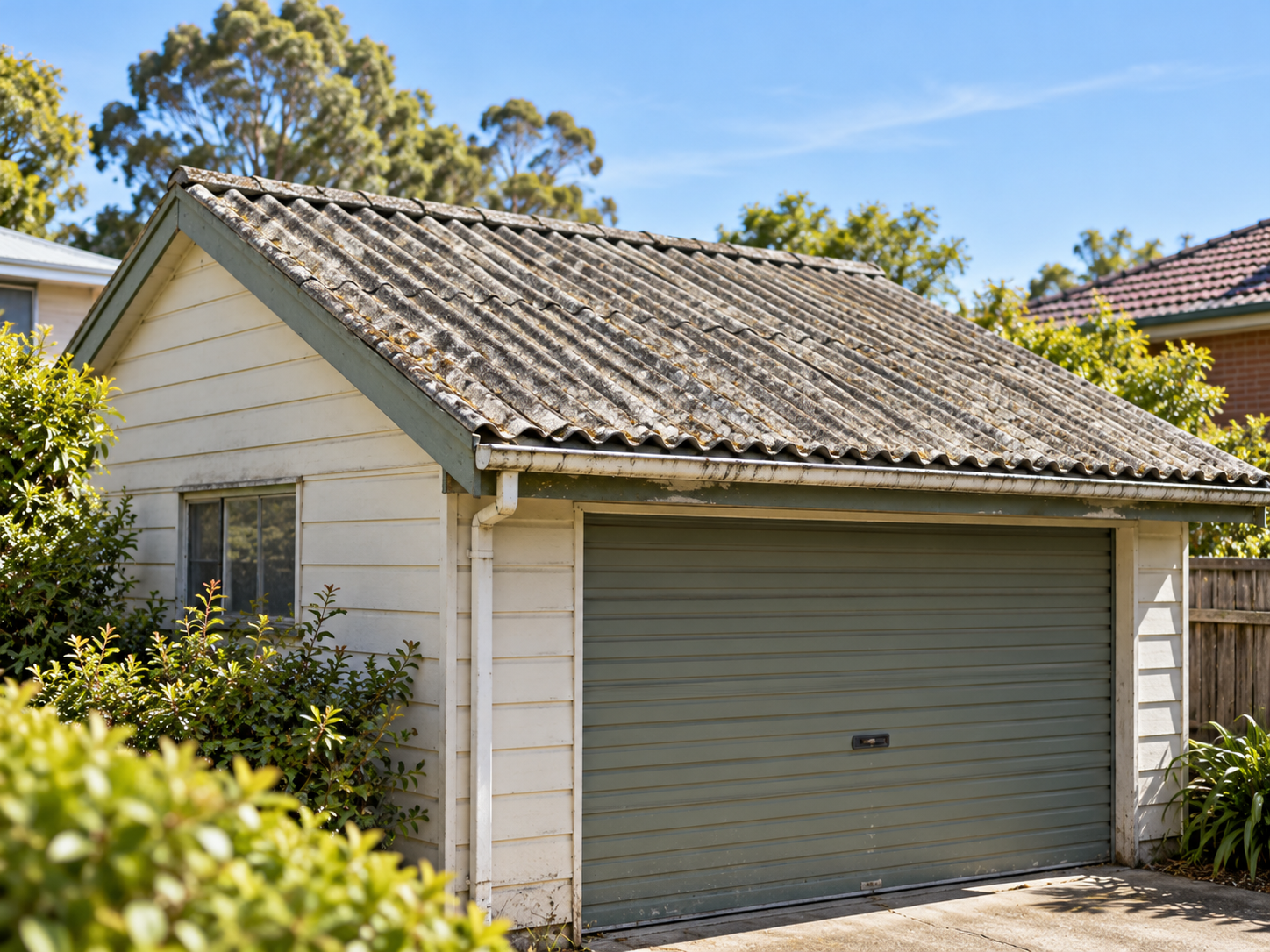
Freestanding structures like garages and sheds are high-risk areas for asbestos roof sheets. Many older sheds were constructed entirely with asbestos shed roof sheets because they were cheap and readily available!
If you have an older detached structure, assume it contains asbestos until proven otherwise. This is especially true for asbestos garage roof installations, which often used the same corrugated grey cement sheets as the main house.
Eaves and Soffits
Don’t forget about the edges of your roof. Asbestos eaves, fascias, and soffits were commonly installed to protect the timber framing from weather. Inspections often overlook these areas, but they can be just as dangerous as the main roof if disturbed.
Other Roofline Materials
Asbestos was also used in flashings, vents, and gutters. Any grey, corrugated, or flat sheeting around the perimeter of your roofline should be treated with extreme caution.
What Does Asbestos Roofing Look Like?
Knowing what asbestos roofing looks like can help you identify potential hazards. Asbestos cement roof sheets are usually:
- Grey or off-white in colour (though they might be painted).
- Corrugated (wavy) or flat.
- Heavy and brittle
If you see sheets that look cracked, broken, or weathered, this is a sign of age and potential degradation.
Asbestos roofs are often found in rows running vertically down the slope of the roof.
Can You Identify Asbestos Just By Looking?
You might have an asbestos roof in Australia and not even know it!
Visual identification has limits. Non-asbestos cement products can look identical to asbestos-containing materials. Painted roofs, different lighting conditions, and manufacturing variations can also make it difficult to identify asbestos.
This is why you cannot confirm asbestos simply by looking at a material.
The only way to be 100% sure is through sending a sample to an accredited National Association of Testing Authorities (NATA) laboratory, so the material can be tested by a licensed professional.
What To Do Before Installing Roof Ventilation in an Older Home
A common reason Australian property owners with older homes carry out roof work is to improve energy efficiency by installing roof ventilation.
But cutting holes for vents or fans in older homes means drilling or cutting into a roof structure that could contain asbestos!
Cutting into an asbestos roof without proper controls can release hazardous fibres into the air, putting both your household and contractors at risk.
That’s why it’s crucial to identify if the roof contains asbestos before installing roof ventilation in an older home!
What Should You Do If You Suspect Asbestos?
If you suspect your roof contains asbestos, follow these 3 immediate safety steps:
- Do Not Disturb It: Asbestos is hazardous when fibres are released into the air, so stop any work and leave it alone.
- Leave It If in Good Condition: If the roof is intact, undamaged, and not being worked on, it is safest to leave it alone and monitor it.
- Seek Professional Testing: Contact a professional asbestos-removal team to inspect your roof and take a sample that can be sent to a NATA-accredited laboratory for asbestos roof testing.
Why You Should Not Drill or Cut Suspected Asbestos
If you suspect your roof contains asbestos, do not drill or cut into it, as this can disturb the fibres. Prolonged exposure to those toxic fibres poses serious health risks, including:
- Lung Cancer
- Asbestosis
- Pleural disorders
- Malignant mesothelioma
Get on the phone with a licensed asbestos removal specialist that complies with local council asbestos removal guidelines, such as those set out by the NSW Government Asbestos Department.
If asbestos is present, the ventilation installation must be planned around safe removal or encapsulation protocols. This ensures your energy-efficiency upgrade doesn’t compromise your health!
What If the Roof Needs Repairing or Replacing?
If your roof is damaged, leaking, or you are planning a full renovation, professional help is important. They will carry out reliable asbestos testing, and if asbestos is found, they can carry out safe, effective roof asbestos removal.
How Asbestos Testing Works
Before any work begins, a sample is collected using strict safety protocols. The sample is sent to a laboratory for polarised light microscopy (PLM) analysis. This process confirms the presence and type of asbestos.
Professional Asbestos Roof Removal
If your asbestos roof needs replacing, use a qualified asbestos removal specialist.
According to SafeWork NSW guidelines on managing risks of asbestos exposure, a licensed Class A asbestos removalist is required for any amount of friable asbestos, while a Class A or Class B licensed removalist is required for more than 10 m² of non-friable asbestos.
As per Clauses 473-474 of the Work Health and Safety Regulation, the appropriate licensed asbestos removal team must:
- Inspect the asbestos removal area and its immediate surroundings.
- Confirm that no visible asbestos contamination remains.
- Issue a clearance certificate confirming the area is safe to reoccupy, provided all clearance requirements have been met.
- Verify that airborne asbestos fibre levels are below 0.01 fibres per millilitre, where air monitoring forms part of the clearance inspection, and record the results on the certificate.
The NSW EPA guidelines for dealing with household asbestos also require proper disposal to avoid legal penalties and health risks.
This is why it’s so important to hire a licensed asbestos removal specialist who can provide a safe, legal removal plan and handle the waste disposal at a licensed facility!
What Happens After the Asbestos Roof Is Removed?
Once the asbestos is removed, the area must be cleaned and inspected by a licensed asbestos assessor.
Your asbestos removal team will issue a Clearance Certificate, confirming the site is safe for re-occupation and for new roof installation.
Then, and only then, can your roof-related renovation or repair be carried out safely and confidently!
Roof Asbestos FAQs
Can I remove an asbestos roof myself?
No. In most states, including NSW, DIY removal of more than a small amount of friable asbestos or any amount of bonded asbestos on a roof is prohibited. You must use a licensed removalist.
Is all old roofing asbestos?
Not necessarily! Many older homes use non-asbestos cement. However, without testing, you can never be 100% sure. Always assume it is asbestos if the building is pre-1990.
How much does asbestos roof removal cost?
Costs vary based on the size of the roof, accessibility, and location. For an accurate price, it’s always best to get a quote from licensed professionals.
Additional Roof Safety and Renovation Guidance
Before Installing Roof Ventilation: A Practical Checklist
If you’re planning to install a roof vent, powered roof ventilator or whirlybird, the materials that will be disturbed must be assessed before installation begins.
Questions to resolve before roof work:
- How old is the existing roof?
- Has the roofing been replaced since the home was built?
- Could the roof sheets, eaves or other materials affected by the installation contain asbestos?
- Is professional assessment or asbestos testing required?
- Who will arrange asbestos management or removal if necessary?
- Is the roof suitable for the proposed ventilation product?
These questions can help avoid unplanned work and reduce the risk of disturbing unidentified materials.
Which Parts of an Older Roof May Need Assessment?
An asbestos assessment should consider the actual materials that might be disturbed. The main roof covering is only one possible location.
| Area | Potential Concern | Before Work Begins |
|---|---|---|
| Roof sheeting | Older corrugated cement sheets may contain asbestos. | Arrange appropriate identification before cutting or drilling. |
| Eaves and soffits | Some older lining sheets contain asbestos cement. | Check materials affected by new fittings or openings. |
| Garage and shed roofs | Older outbuildings may retain original cement sheeting. | Include them in the assessment if installation is planned. |
| Gables and cladding | Some older exterior cladding products may contain asbestos. | Identify suspect materials before alterations. |
| Roof cavity | Older building materials or insulation may require assessment. | Seek professional advice before disturbance. |
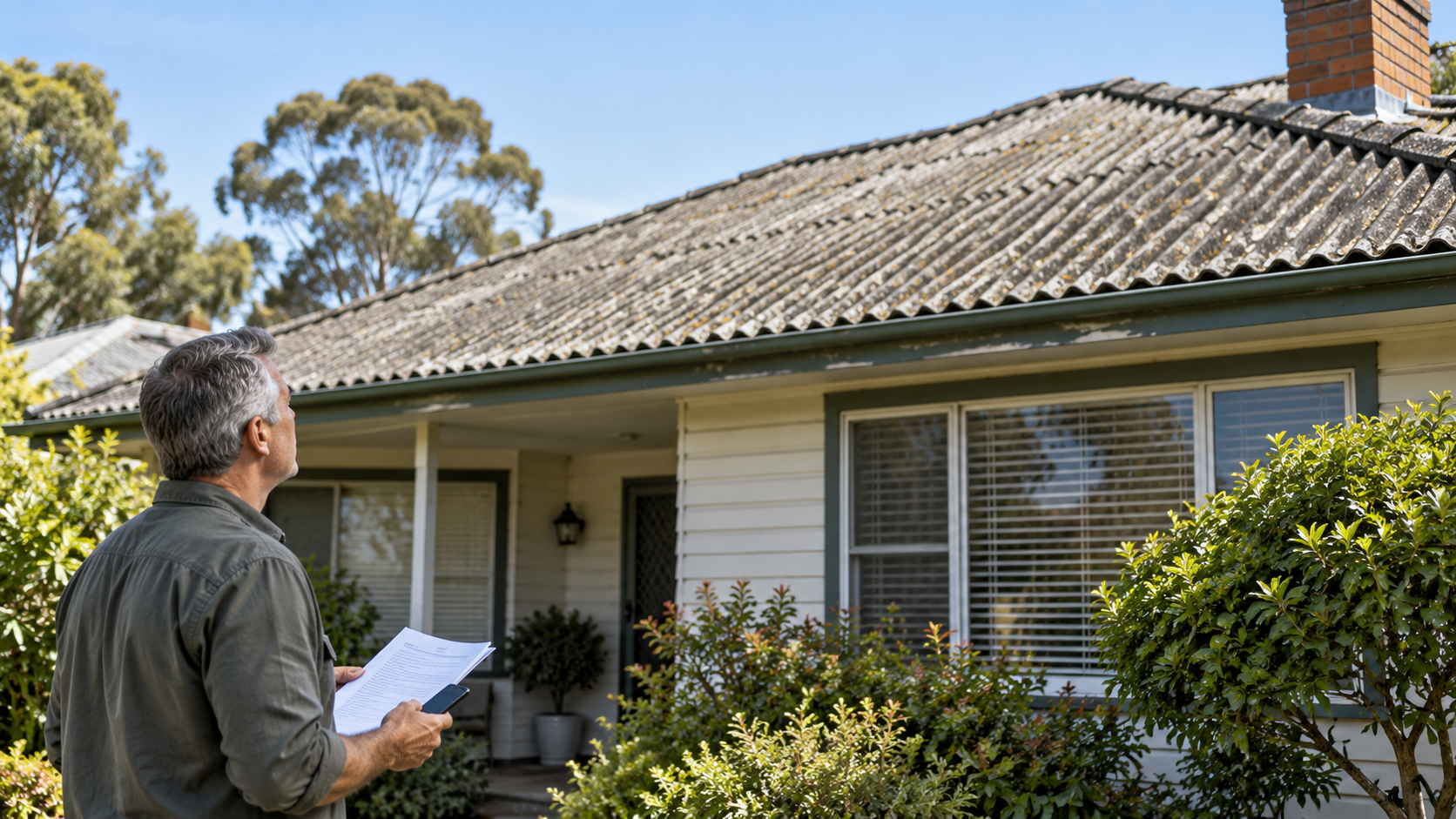
What Happens If Asbestos Is Found Before Installing Roof Ventilation?
Finding asbestos does not automatically mean abandoning a roof improvement project. It does mean the work needs to be planned around the relevant asbestos safety requirements.
1. Identify the material. Have suspected roofing assessed and arrange laboratory testing where appropriate.
2. Review the proposed work. Determine whether the roof ventilation installation would disturb asbestos-containing materials.
3. Arrange specialist asbestos work. If removal is required, use an appropriately licensed professional.
4. Complete required clearance procedures. For licensed asbestos removal, an appropriate independent clearance inspection and certificate are required before the affected area is reoccupied.
5. Plan the ventilation installation. Once the asbestos work has been properly completed and the roof is suitable, the installation can proceed under appropriate conditions.
For example, professional asbestos roof removal is available from ABS Asbestos for projects across Newcastle and surrounding areas.
Important Clarifications About Asbestos Roof Safety
Asbestos roofing is a serious fall hazard. Older asbestos-cement sheets may be extremely brittle and should not be walked on. Do not attempt to collect a roofing sample yourself.
Clearance requirements vary. The person authorised to inspect and clear asbestos removal work depends on the licence class and type of removal. In NSW, Class A licensed removal work requires clearance by an independent licensed asbestos assessor; some Class B clearance work may be performed by another independent competent person.
Removal rules are more nuanced than a universal DIY ban. NSW has limited circumstances allowing unlicensed removal of small quantities of non-friable asbestos. However, asbestos roofing presents significant fall and exposure risks, and specialist removal is strongly recommended.
Never drill or pressure-clean suspected asbestos roofing. These activities can release hazardous fibres and may breach asbestos safety requirements.
For authoritative guidance, consult SafeWork NSW’s asbestos safety information.
Can You Install a Whirlybird or Powered Roof Vent on an Older Roof?
The suitability of a roof ventilator depends on the roof’s design, condition, construction materials and the requirements of the ventilation product.
If the proposed work may disturb asbestos-containing materials, those risks need to be professionally assessed and appropriately managed before installation.
Big Roof Ventilators offers natural and powered home roof ventilation systems for suitable Australian roofs. Roof ventilation is not an asbestos removal or decontamination method.
Planning Roof Ventilation for Your Home?
Before installing new ventilation in an older property, understand the condition and materials of the existing roof.
Once the roof is suitable for installation and any asbestos risks have been addressed, Big Roof Ventilators can help you explore appropriate roof ventilation options.
Enquire About Roof Ventilation →