Australian Homeowners Guide: How Close Should Tree Branches Be to Your Roof?
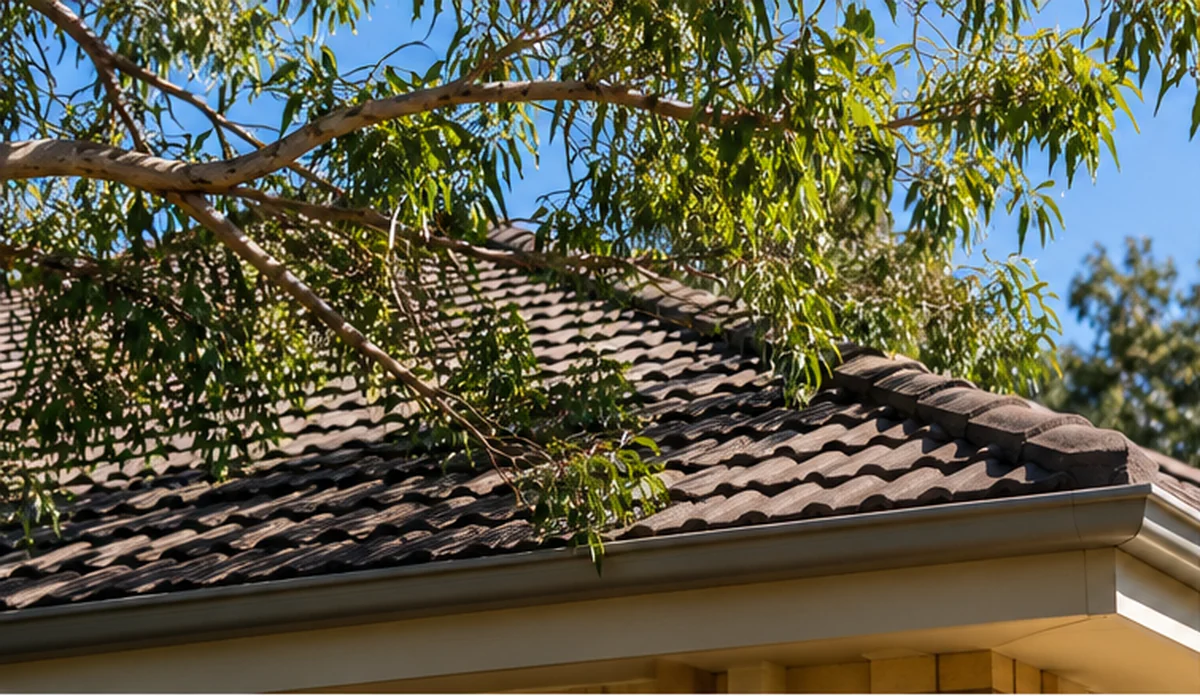
If you are reading this article, you’re probably looking out of your window and wondering, “Should that tree branch be that close to my roof?”
For Australian homeowners with mature trees in their garden, the proximity of tree branches to their roof, gutters or ventilation system is an important maintenance concern.
While there is no magic distance that applies to every property, understanding the risks of tree branches over roof areas is essential for protecting your home!
This guide shows how trees near your house can affect your roof, the signs of potential damage, and when to call in professional tree pruning services.
Keep reading to the end for a handy maintenance checklist you can use when inspecting your trees!
How Close Should Tree Branches Be To Your Roof?
Determining the right tree clearance from house boundaries depends on your tree’s growth habit and your home’s infrastructure.
The Australian engineering standard AS 2870:2009 suggests that trees should be planted at a distance from buildings equal to 1.5 times the mature height of the tree (or a minimum of 3–4 meters for smaller trees). This primarily prevents root-induced heave or settlement, but it can also help prevent tree branch-related roof issues.
But if your trees are already planted, your primary goal is to prevent physical contact with your home. If branches are touching your roof, they are already causing problems!
The Australian Government National Emergency Management Agency (NEMA) recommends trimming trees that overhang the roof or are within 6m of the house, as a general rule.
But there is no universal distance that every tree should be kept from a roof. The right clearance will depend on:
- tree species
- branch structure
- property layout
- the reason pruning is required
Keeping a good clearance space around your house ensures:
Airflow, allowing roof ventilation systems to function without obstruction from dense foliage.
Access, providing safe pathways for roof inspections and gutter cleaning.
Wind Resistance, reducing the “sail effect” during storms, where wind catches large canopies and transfers force to the roof structure.
Can Tree Branches Damage A Roof?
The short answer is, they absolutely can. Tree branches damaging roof surfaces is a big cause of premature roofing failure in Australia. Here’s what damage overhanging branches can do:
Physical Abrasion and Impact
Constant rubbing of branches against roof tiles, terracotta, or metal roofing wears away protective coatings and seals. This abrasion can eventually crack tiles or loosen metal fasteners.
In high winds, heavy branches can snap and strike your roof, causing immediate puncture damage or dislodging underlay, which leads to leaks.
Weight and Structural Stress
Australian weather patterns, such as heavy rain and strong winds, can add weight to tree limbs. If a large branch leans over your roof, the added weight of saturated leaves or ice can cause it to fail and crash onto your home.
How Do Trees Interfere With Gutters and Roof Ventilation?
The problems caused by overhanging tree branches don’t stop at your roof. They can also affect where your roof meets the walls, including the eaves, gutters and vents.
Trees blocking gutters are a common complaint from Australian homeowners during autumn. When leaves and debris collect in gutters, they create dams that prevent water runoff. This can cause:
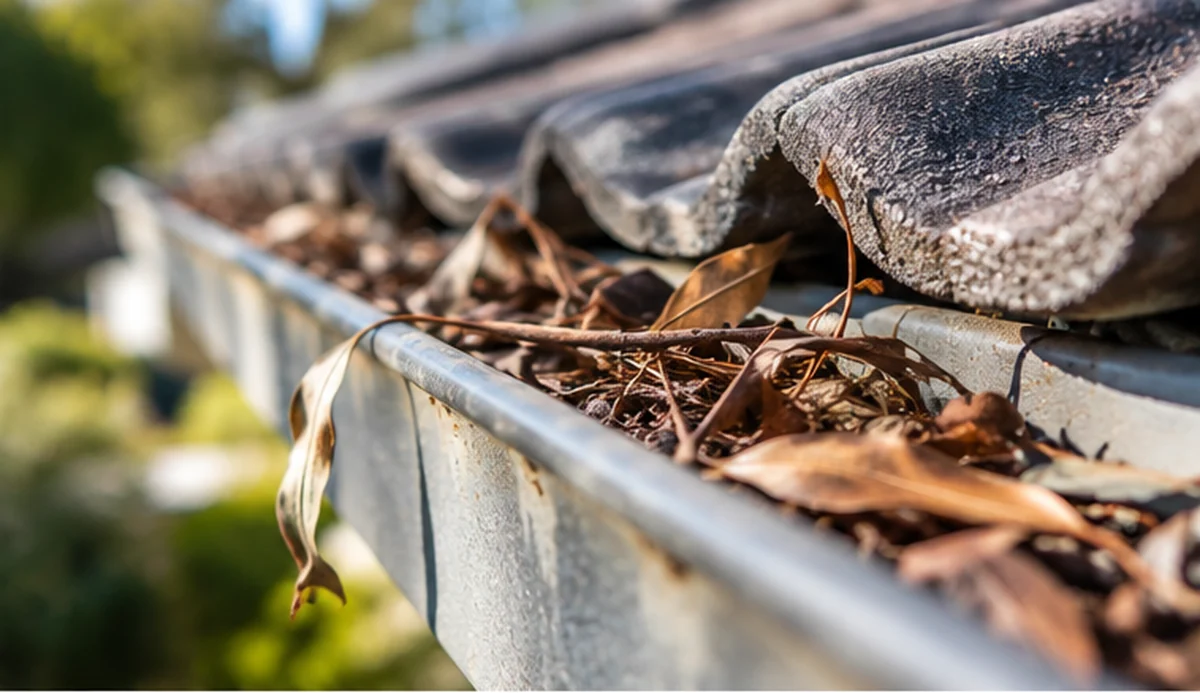
- Overflow
- Rot And Mould
- Water Pooling Near The Foundation
- Soil Movement And Subsidence
- Gutter Detachment
Overhanging, dense foliage can also block intake and exhaust vents, trapping heat and humidity. This lack of airflow can lead to moisture buildup in the roof space, which damages insulation and causes mould growth on timber rafters. Trapped heat can also increase cooling costs.
Overhanging branches can even act as natural bridges for pests! Possums, rats, and spiders use branches touching roof areas to access roof cavities and subfloors. Once inside, these pests can damage your home’s electrical wiring, insulation, and timber structures.
When To Worry About Overhanging Branches
Regular visual checks can identify hazards before they become serious emergencies. Look out for these warning signs:
- Any branch touching the roof, gutters, or walls.
- Dead or dying limbs hanging directly over the house.
- Trees leaning significantly toward the structure, especially after recent storms.
- Signs of decay or fungal growth on branches near the house.
- Broken limbs hanging precariously
If you notice any of these, your tree needs immediate attention.
Should You Cut Overhanging Branches Yourself?
While small, low-hanging branches can sometimes be managed with hand tools, DIY tree pruning around homes can be very risky.
In Australia, tree work is regulated by strict safety standards. The Work Health and Safety (WHS) Regulations require you to manage risks associated with working at heights and using chainsaws. Many states also have legislation on tree removal and pruning on private land, especially if the tree is protected under a local Environmental Protection Order (EPO) or is near power lines.
Speaking of power lines, a common and fatal risk in Australia is contacting overhead power lines whilst working. If branches are within 3 meters of power lines, please do not attempt any pruning or removal. Only accredited electrical line clearance contractors or certified arborists should work in this high-risk zone!
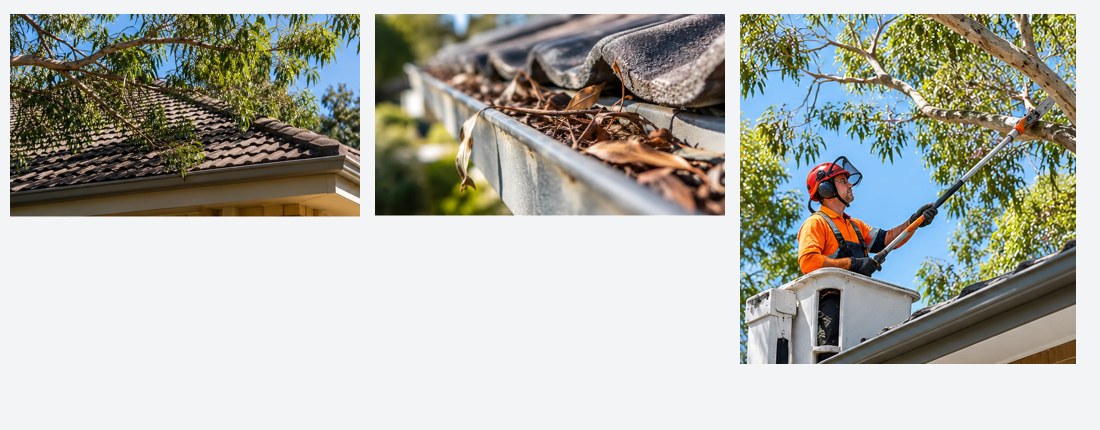
Professional arborists work with the insurance, standards and qualifications needed for any pruning job. They hold a Certificate III in Arboriculture, which is the standard qualification for professional tree work. They also uphold AS4955-2009, the Australian Standard for Tree Maintenance. A trustworthy arborist will be insured with Public Liability Insurance (minimum $10 million) so you can feel confident that your home is in safe hands.
Tree Pruning Vs Lopping: Is There A Difference?
It is important to distinguish between pruning trees near a house for health and simply cutting branches back for clearance.
Pruning involves selective cuts to improve tree health, structure, and safety. It removes dead wood and thins the canopy to reduce wind resistance and improve airflow.
Lopping is simply cutting the ends of branches (heading back). This is not recommended as it can cause decay, weak regrowth (suckers), and structural weakness in the tree.
Proper professional tree pruning helps maintain clearances and prevents hazardous debris buildup, keeping the tree healthy while reducing risk to your home.
Maintenance Checklist: When To Inspect Your Trees
Homeowners should visually inspect their trees at least twice a year, ideally in late autumn and early spring. Trees should also be inspected after a heavy storm!
Use this handy checklist when inspecting your trees to assess risk:
Homeowner Tree Maintenance Checklist
- Are any branches physically touching the roof or gutters?
- Are there dead limbs hanging over the house or living areas?
- Are heavy branches positioned above bedrooms or living spaces?
- Are leaves repeatedly filling gutters despite cleaning?
- Are branches obstructing access to roof vents or maintenance areas?
- Has there been recent storm damage or visible leaning?
- Are new branches growing directly toward structures?
When Should You Call An Arborist?
Knowing when to call a professional is crucial for safety. If branches are touching your roof, blocking gutters, or if you suspect structural damage, contact a qualified expert immediately. Never attempt to prune near power lines or remove large, dead limbs yourself!
Hiring arborist tree pruning services makes sure the work complies with Australian safety standards and local council regulations. A certified arborist can assess your tree health, recommend the best pruning techniques, and reduce risks to your home’s ventilation and structure.
Always verify that your tree pruning provider holds a Level 2 Arborist qualification! This ensures they have the technical expertise to safely perform complex tree pruning near your home.
By understanding the risks of tree branches over roof areas as well as keeping on top of tree pruning and maintenance, you can protect your home from water damage, pest infestations, and structural failures!
Remember, regular inspection and proactive management are far easier and more effective than reactive repairs.
FAQs About Overhanging Tree Branches
How often should I prune trees near my house?
For fast-growing species (like Fig or Eucalypt), annual light pruning is usually needed. Slower-growing trees might only need inspection every 2–3 years. But it’s always best to ask the advice of your local tree pruning professionals to get the most accurate pruning timeframe that will protect your property.
Can trees affect my home’s energy bills?
Yes. Blocked ventilation can raise cooling costs in summer, and shaded roofs can reduce passive heating in winter. Proper clearance helps maintain optimal thermal performance and reduce your energy bills.
What if a branch falls on my roof?
First, you should make sure everyone is safe and out of the danger zone. Then immediately call your local tree emergency service. Document the damage with photos when it is safe to do so. You will need these when you contact your home insurance provider if you want to make a claim.
Is it legal to prune trees on my neighbor’s property?
The Victoria Government guidance for overhanging branches states that you have the right to prune branches that cross your property boundary line, at your own cost. This is called a ‘right of abatement’. But you cannot enter your neighbour’s land without permission. Always check with your local council, as some trees are protected.
Additional Guidance: Tree Clearance, Standards and Roof Safety
When planning tree work around your home, it helps to distinguish between three different considerations: how close branches are to roofing materials, how close the tree is to building foundations, and whether the work involves nearby electricity infrastructure.
Tree Distance and Roof Clearance Are Different Issues
AS 2870 deals with residential slabs and footings, including how site conditions can affect foundation design. Guidance relating to tree roots and soil movement should not be interpreted as a universal minimum branch clearance for every roof.
For existing trees, an arborist should consider branch structure, expected movement, future growth and the particular building elements that need protection.
Check the Correct Pruning Standard and Qualifications
The relevant Australian standard for amenity-tree pruning is AS 4373-2007 — Pruning of amenity trees. It provides guidance for pruning practices, including deadwooding, selective pruning, crown reduction and crown lifting.
When choosing a provider, check that their qualifications suit the work. AQF Level 3 arboriculture qualifications are associated with practical tree work, while AQF Level 5 qualifications may be appropriate for detailed consulting arborist assessments. AQF Level 2 alone should not be treated as sufficient proof of competence for complex tree pruning.
Ask for evidence of relevant insurance rather than assuming every contractor must carry the same minimum public liability amount.
Never Use a Single Powerline Clearance Rule
Safe approach distances for powerlines depend on the line, voltage, jurisdiction, work being performed and the person’s training or authorisation.
If a branch, ladder or tool could enter the relevant electrical safety zone, do not attempt the work yourself. Contact the electricity network operator or an appropriately authorised contractor.
For further guidance, consult SafeWork NSW’s powerline safety information .
What Should You Check on Your Roof After Tree Pruning?
Professional pruning can help reduce future contact between trees and your roof, but it’s also worth checking the condition of the roofing system afterwards.
Post-Pruning Roof Maintenance
- Roof tiles: Check whether any tiles were cracked or displaced before the work.
- Gutters and valleys: Remove accumulated leaves and small branches safely.
- Roof ventilation: Check that vent openings and equipment remain clear of debris.
- Flashing and roof edges: Look for visible damage where branches were previously in contact.
- Roof leaks: If you notice staining or water entry, arrange for a qualified roofer to investigate.
Always inspect from a safe position. Roof access and repairs should be undertaken by appropriately qualified professionals.
Can Nearby Trees Affect Roof Ventilation Performance?
Nearby trees can make roof maintenance more demanding, particularly when they regularly shed leaves, bark or seed pods.
However, shading alone does not mean a roof ventilation system is ineffective. Ventilation performance depends on the system’s design, the location and size of its intake and exhaust openings, and whether those airflow paths remain clear.
If you’re considering new roof ventilation, it makes sense to assess tree coverage, existing roof condition and access requirements together.
You can explore home roof ventilation solutions from Big Roof Ventilators.
If your roof is older and you’re concerned about its construction materials, our guide to identifying possible asbestos roofing explains some of the precautions to consider before work begins.
Looking After Your Roof Space?
Regular gutter maintenance, sensible tree management and clear roof ventilation openings all contribute to a better-maintained home.
If you’re considering improving airflow through your roof space, explore our ventilation options for suitable Australian homes.
Explore Home Roof Ventilation →